
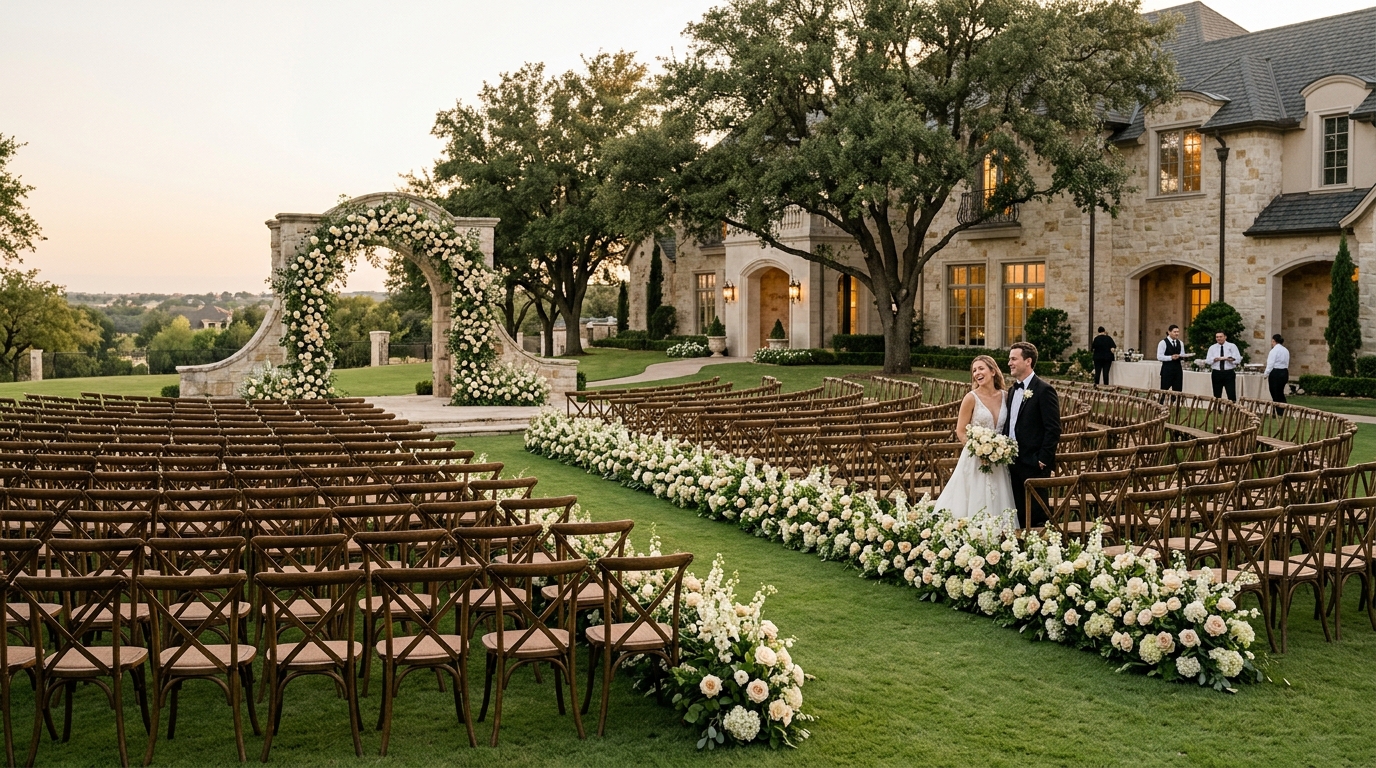
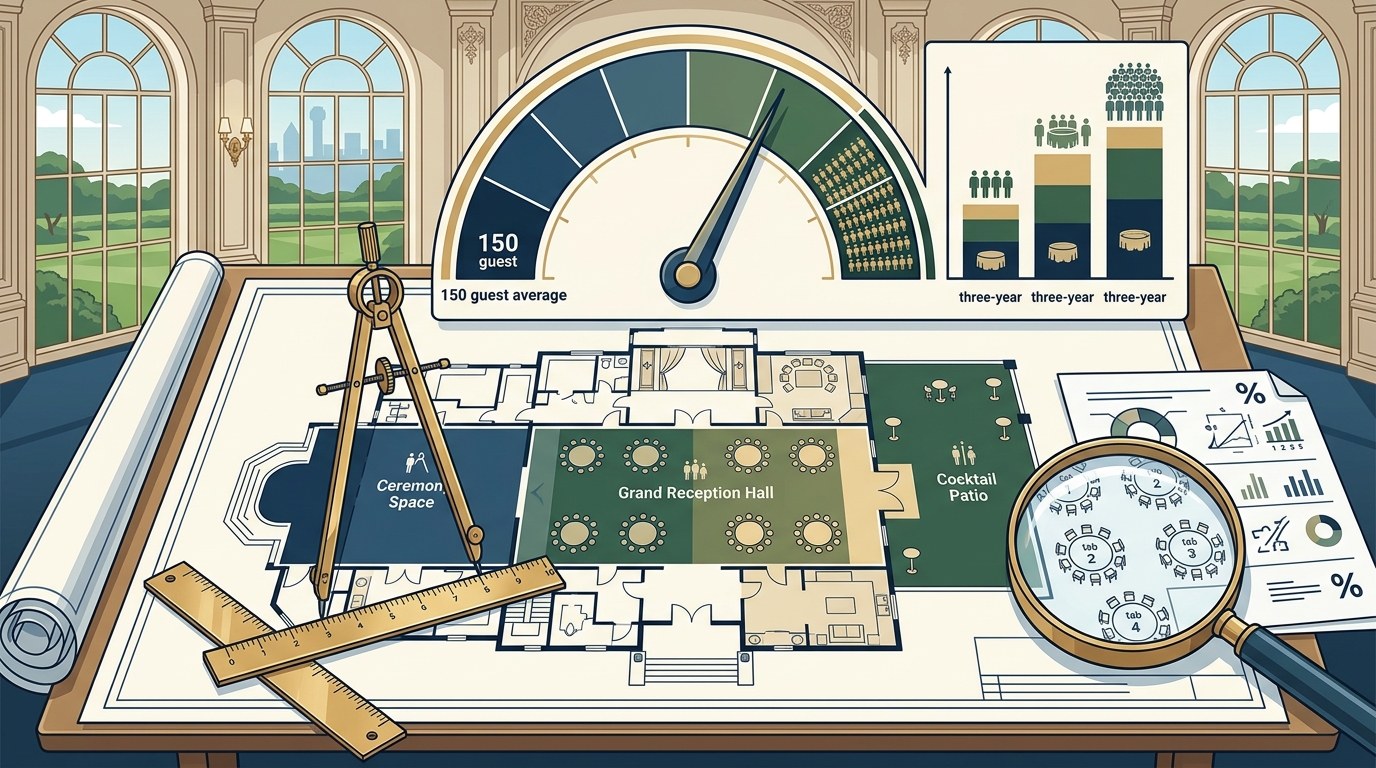
Planning a wedding in the Dallas-Fort Worth metroplex involves navigating a complex landscape of venue capacities, spatial logistics, and luxury service expectations. According to recent industry data, the average wedding in Texas now hosts approximately 150 guests, yet the demand for high-capacity luxury spaces has surged by 20 percent in the last three years. This shift means that selecting a venue is no longer just about aesthetics; it is a critical logistical exercise in matching your headcount with the right square footage and infrastructure. A mismatch in capacity can lead to cramped receptions, inflated catering costs, or the heartbreak of losing your preferred date to a larger event. This guide provides the definitive framework for aligning your guest list with the operational realities of top-tier Dallas wedding estates. (Knotting Hill Place Estate)
Understanding Capacity: Intimate vs. Grand Celebrations
The first step in venue selection is defining your guest count tier. In the luxury wedding market, venues typically categorize their spaces into three distinct bands: intimate (under 100 guests), mid-size (100 to 200 guests), and grand (200 to 400+ guests). Each tier requires different architectural features and service models. A venue designed for 300 guests will feel cavernous and cold if you only have 80 attendees. Conversely, a boutique estate will feel suffocating if you invite 250 people. (Blog mdash Knotting Hill)
Grand capacity venues require robust infrastructure to support large-scale events. These spaces must accommodate massive dining setups, extensive bar stations, and large-scale dance floors without compromising the luxury experience. According to wedding industry reports, venues that successfully manage 300+ guests often utilize open-concept layouts that allow for seamless transitions between ceremony, cocktail hour, and reception areas. This flexibility is crucial for maintaining guest engagement throughout the day. (Knotting Hill Place)
When evaluating venues, look for those that explicitly state their maximum capacity for both seated dinners and cocktail-style receptions. A venue might seat 200 guests but comfortably host 350 for a standing cocktail hour. Understanding this distinction helps you gauge whether the space will feel appropriately scaled for your specific event style.
Spatial Logistics and Flow
Spatial logistics refer to the movement of guests between different zones of the venue. A luxury venue must offer a natural flow that prevents bottlenecks during peak transition times, such as the shift from cocktail hour to dinner. If your guest count exceeds 150, you need a venue with multiple entry and exit points, wide corridors, and distinct zones for dining and dancing.
Consider the ceremony-to-reception distance. In many Dallas estates, the ceremony lawn is separate from the indoor ballroom. For large guest counts, this distance must be manageable, especially for elderly guests or those in formal attire. Venues that offer covered walkways or shuttle services between these zones demonstrate a higher level of operational maturity.
Another critical factor is the bar and catering infrastructure. Large guest counts require multiple bar stations to prevent long lines. A venue with a single, small bar will struggle to serve 200 guests efficiently. Look for venues that have built-in bar areas or flexible spaces that can accommodate multiple service points. Additionally, the catering kitchen must be large enough to support the volume of food preparation required for your headcount.
Indoor and Outdoor Flexibility
Dallas weather can be unpredictable, with sudden thunderstorms or extreme heat. A luxury venue must offer a seamless indoor-outdoor experience. This means having a climate-controlled indoor space that is just as elegant as the outdoor lawn, ensuring that your guests remain comfortable regardless of the weather.
Synthetic grass event lawns have become a popular feature in luxury Dallas venues. They provide a lush, green aesthetic without the maintenance issues of natural grass, and they can withstand heavy foot traffic from large guest counts. When evaluating a venue, ask about the quality and maintenance of their outdoor spaces. A well-maintained lawn enhances the luxury feel and provides ample space for ceremony seating and cocktail mingling.
Furthermore, consider the climate control of your indoor space. High ceilings, such as the 55-foot ceilings found in some premier Dallas estates, create a sense of grandeur but can be challenging to heat or cool. Ensure the venue has a robust HVAC system that can maintain comfort for your specific guest count. This is particularly important for winter weddings, where large spaces can feel drafty.
Accommodation and Guest Experience
For destination weddings or multi-day celebrations, on-site or nearby accommodations are a significant value add. Guests traveling from out of town appreciate the convenience of staying close to the venue. This reduces transportation costs and enhances the overall guest experience.
On-property guest homes are a rare and highly sought-after feature in the Dallas wedding market. These homes offer a private, luxurious retreat for the wedding party and immediate family. Having accommodations within walking distance of the venue creates a cohesive and intimate atmosphere for the wedding weekend. It also allows for extended celebrations, such as late-night after-parties, without the need for complex transportation logistics.
When evaluating accommodation options, consider the proximity to local hotels. Even if the venue does not have on-site rooms, a strong partnership with nearby luxury hotels can provide discounted rates for your guests. This is a key service that many top-tier venues offer to enhance their value proposition.
Vendor Integration and Infrastructure
A luxury venue is more than just a space; it is a partner in your wedding planning. The right venue will have a network of preferred vendors who are familiar with the space and its operational quirks. This familiarity leads to smoother execution and fewer surprises on your wedding day.
Preferred vendor networks are particularly important for large guest counts. Vendors who know the venue can plan their logistics more effectively, from load-in times to power requirements. This reduces the risk of delays or technical issues. Additionally, venues with in-house coordination teams can provide valuable insights into how to best utilize the space for your specific headcount.
Consider the valet and security services included in the venue package. For large events, parking can become a significant challenge. A venue that offers included valet parking and security ensures that your guests arrive and depart safely and smoothly. This is a critical component of the luxury experience and is often overlooked by couples until it is too late.
Key Takeaways
- Capacity Matching: Ensure the venue's maximum capacity aligns with your guest count to avoid a cramped or cavernous feel.
- Spatial Flow: Prioritize venues with multiple bar stations and wide corridors to handle large guest movements efficiently.
- Climate Control: Verify that high-ceilinged indoor spaces have robust HVAC systems for year-round comfort.
- Outdoor Alternatives: Look for synthetic grass lawns that offer durability and aesthetic appeal for ceremonies and cocktails.
- Accommodations: On-property guest homes provide a unique luxury experience for the wedding party and immediate family.
- Vendor Network: A strong preferred vendor list ensures smoother execution and better logistical planning.
- Included Services: Valet parking and security are essential for large events and should be part of the core package.
Frequently Asked Questions
What is the ideal square footage per guest for a luxury wedding?
For a comfortable luxury experience, aim for at least 15 to 20 square feet per guest in the reception area. This allows for ample space for dining, dancing, and mingling without feeling crowded.
How do I determine if a venue can handle my specific guest count?
Ask the venue for their maximum seated dinner capacity and their maximum cocktail capacity. Compare these numbers to your guest list to ensure the space is appropriately scaled. A venue that is too large will feel empty, while one that is too small will feel cramped.
Are on-site accommodations necessary for a luxury wedding?
While not strictly necessary, on-site accommodations significantly enhance the guest experience by providing convenience and intimacy. They are particularly valuable for destination weddings or multi-day celebrations.
What should I look for in a venue's catering kitchen?
Ensure the kitchen is large enough to support the volume of food preparation required for your guest count. It should have adequate refrigeration, prep space, and access to the dining area for efficient service.
How important is valet parking for a large wedding?
Extremely important. For weddings with 150+ guests, valet parking ensures a smooth arrival and departure experience, reduces traffic congestion, and adds a layer of luxury service that guests will appreciate.
Can a venue accommodate both indoor and outdoor ceremonies?
Many luxury venues offer both options. Look for a venue with a climate-controlled indoor space and a well-maintained outdoor lawn to provide flexibility in case of weather changes.
What is the role of a preferred vendor network?
A preferred vendor network connects you with professionals who are familiar with the venue's layout and operations. This familiarity leads to smoother execution, better planning, and fewer surprises on your wedding day.
Start Your Planning Journey
Choosing the right luxury wedding venue for your guest count is a critical decision that sets the tone for your entire celebration. By focusing on capacity, spatial logistics, and guest experience, you can ensure a seamless and unforgettable event. Contact Knotting Hill Place today to schedule a private tour and explore how our premier Dallas-Fort Worth estate can accommodate your vision.