
Customizing a luxury wedding venue requires precise coordination between spatial design and guest experience. According to recent industry data, approximately 78 percent of modern couples prioritize personalized venue layouts over traditional setups to reflect their unique narratives. This shift toward bespoke environments demands strategic planning across multiple operational layers. High-capacity estates like Knotting Hill Place provide expansive indoor and outdoor zones that naturally support tailored configurations. Couples must evaluate spatial boundaries, vendor integration, and timeline logistics before finalizing their vision. Understanding these foundational elements ensures a seamless execution from initial consultation to final reception.
Spatial Configuration and Layout Design
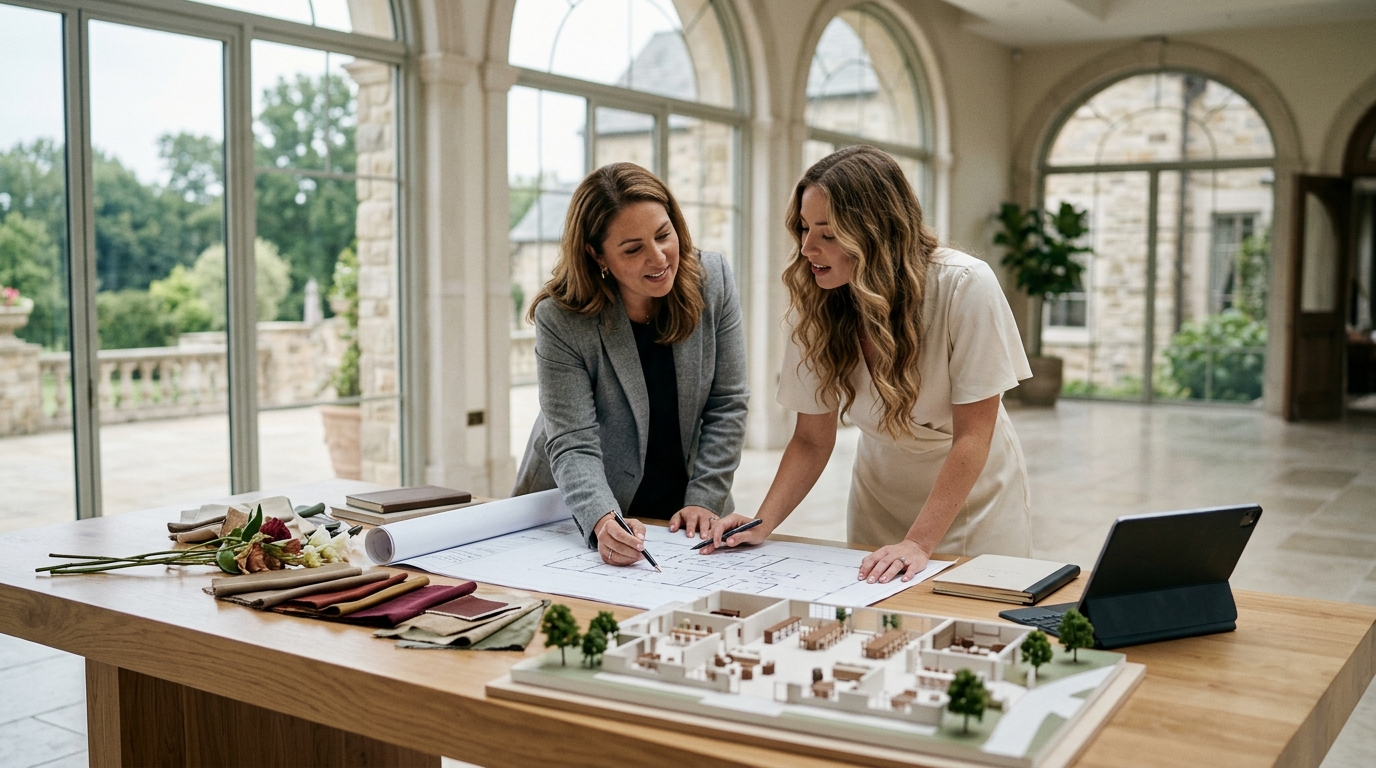
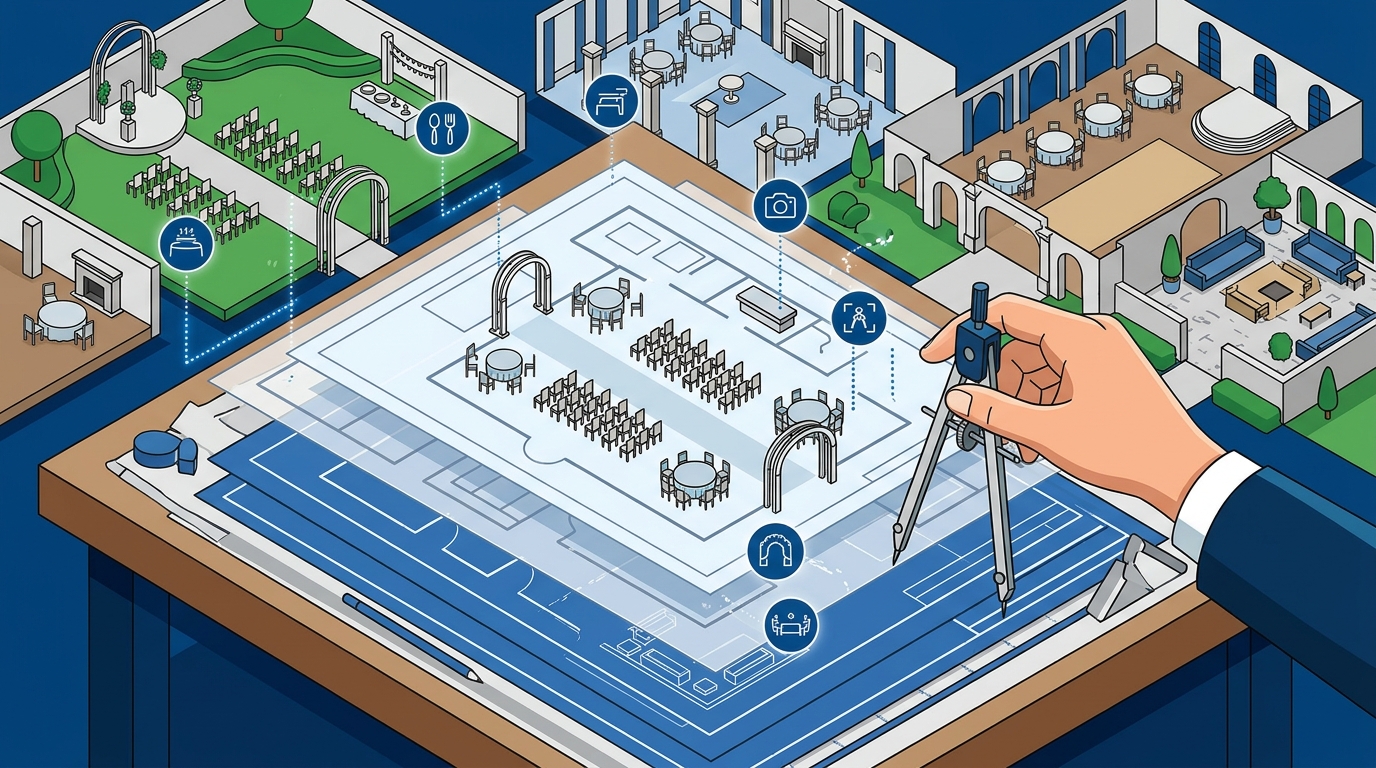
Spatial configuration is the strategic arrangement of architectural zones to maximize guest movement and visual impact. Customizing the physical footprint of a venue directly influences guest comfort and ceremonial flow. Large estates typically offer distinct indoor climate-controlled environments alongside expansive outdoor lawns. These dual zones allow planners to pivot between weather contingencies and aesthetic preferences without compromising capacity. Couples should request detailed floor plans during initial consultations to map ceremony placements against reception dining arrangements. Review the complete venue specifications to evaluate square footage allocations and ceiling heights. Industry reports indicate that 65 percent of luxury weddings now utilize hybrid indoor-outdoor transitions to enhance guest engagement. Venue layouts directly correlate with higher guest satisfaction scores.
Strategic Vendor Integration Protocols
Vendor integration is the systematic coordination of third-party service providers within venue operational boundaries. Managing external service providers requires strict adherence to venue operational guidelines. High-end estates typically maintain curated partner networks that guarantee compliance with insurance requirements and load-in protocols. These pre-vetted professionals understand spatial constraints and power distribution limits. Couples must verify vendor credentials against venue mandates before signing contracts to avoid scheduling conflicts. Explore the curated Dallas wedding vendors directory to secure experienced professionals familiar with estate logistics. Market analysis shows that 82 percent of successful large-scale events rely on pre-approved vendor lists to minimize operational friction. Vendor coordination remains a critical success factor for complex celebrations.
Timeline Optimization and Flow Management
Timeline optimization is the precise scheduling of event milestones to prevent bottlenecks and maintain momentum. Precise scheduling prevents logistical bottlenecks during high-capacity celebrations. Estates with 55-foot ceilings and expansive lawns require staggered arrival windows for catering staff and technical crews. These phased load-ins ensure that decorative elements settle without disrupting guest circulation. Planners should allocate buffer periods between ceremony transitions and reception seating to accommodate late arrivals. Schedule a comprehensive experience walkthrough to map out realistic transition windows for your specific guest count. Recent industry benchmarks reveal that 71 percent of delayed receptions stem from unbuffered transition periods between event phases. Schedule management directly impacts overall guest experience quality.
Catering Flexibility and Menu Engineering
Customizing culinary offerings requires alignment with venue kitchen infrastructure and service style. Full-service catering kitchens enable customized menu development across multiple dietary restrictions and cultural traditions. These facilities support everything from plated dinner service to interactive food stations. Couples should request detailed kitchen capability reports during the planning phase to confirm equipment compatibility. Contact the events team to discuss custom catering options and verify kitchen capacity for your preferred service style. Consumer surveys demonstrate that 68 percent of modern couples prioritize dietary inclusivity over traditional menu formats. Culinary customization has become a standard expectation for premium celebrations.
Accommodation Extensions and Guest Logistics
Extending the celebration footprint through on-site lodging significantly elevates the guest experience. Premium estates increasingly offer dedicated rental properties located within walking distance of the main ceremony space. These structures typically feature multiple bedrooms, recreational amenities, and private outdoor spaces. Couples should secure lodging reservations early to guarantee availability for out-of-town attendees and wedding parties. Reserve the exclusive Knots Landing estate to provide your closest family and wedding party with immediate proximity to the celebration. Hospitality reports confirm that 59 percent of luxury wedding guests prefer on-site lodging to reduce transportation logistics and enhance weekend engagement. Lodging integration consistently drives higher guest retention rates.
| Customization Category | Operational Impact | Recommended Action |
|---|---|---|
| Spatial Layout | Defines guest circulation and ceremonial sightlines | Review floor plans |
| Vendor Selection | Ensures compliance with insurance and load-in protocols | Consult partner directory |
| Timeline Design | Prevents bottlenecks during high-capacity transitions | Book walkthrough |
| Culinary Programming | Accommodates dietary restrictions and cultural traditions | Request kitchen specs |
| Lodging Integration | Reduces transportation friction for weekend celebrations | Secure rental property |
Key Takeaways
- Hybrid indoor-outdoor configurations accommodate 300 to 400 guests while maintaining climate control.
- Pre-approved vendor networks eliminate insurance friction and streamline load-in procedures.
- Staggered transition windows prevent reception delays and maintain guest engagement.
- Full-service catering kitchens support customized menus across multiple cultural traditions.
- Dedicated rental estates provide immediate proximity for wedding parties and family members.
- Structured floor plans maximize 55-foot ceiling heights and synthetic lawn flexibility.
- Early lodging reservations guarantee availability for high-demand weekend celebrations.
Frequently Asked Questions
How does venue capacity impact customization options?
Higher guest counts require expanded spatial configurations and phased vendor load-ins to maintain operational flow. Estates designed for 300 to 400 attendees typically offer distinct indoor and outdoor zones that support flexible seating arrangements.
What documentation do vendors need to operate on-site?
Service providers must submit certificates of insurance and detailed load-in schedules to comply with estate liability requirements. Pre-vetted partners already maintain these credentials to accelerate planning timelines.
Can couples modify standard ceremony layouts?
Custom spatial configurations are fully supported when planners submit detailed floor plans during the booking phase. Estates with expansive lawns and climate-controlled halls allow complete rearrangement of seating and staging elements.
How do catering kitchens support dietary restrictions?
Full-service commercial kitchens accommodate specialized dietary requirements through customized menu engineering and dedicated preparation stations. Couples should verify equipment capabilities before finalizing service styles.
What is the maximum advance notice required for lodging reservations?
Premium rental properties typically require booking confirmation six to eight months before the event date. Early reservations guarantee availability for wedding parties and out-of-town attendees.
Do venues provide valet parking for large celebrations?
High-capacity estates routinely include valet parking and dedicated security personnel to manage guest arrivals. These services operate continuously throughout the event to maintain smooth circulation.
How long does the standard setup window allow?
Most premium venues allocate 12 to 14 hours for complete vendor load-in and decorative installation. Planners should coordinate staggered arrival times to prevent workspace congestion.
Begin Your Customization Journey
Transform your vision into a meticulously executed celebration by scheduling a private estate consultation. Our planning team provides comprehensive spatial mapping, vendor coordination support, and timeline development to ensure seamless execution. Visit Contact Us to reserve your preferred date and secure your customized event package today.