
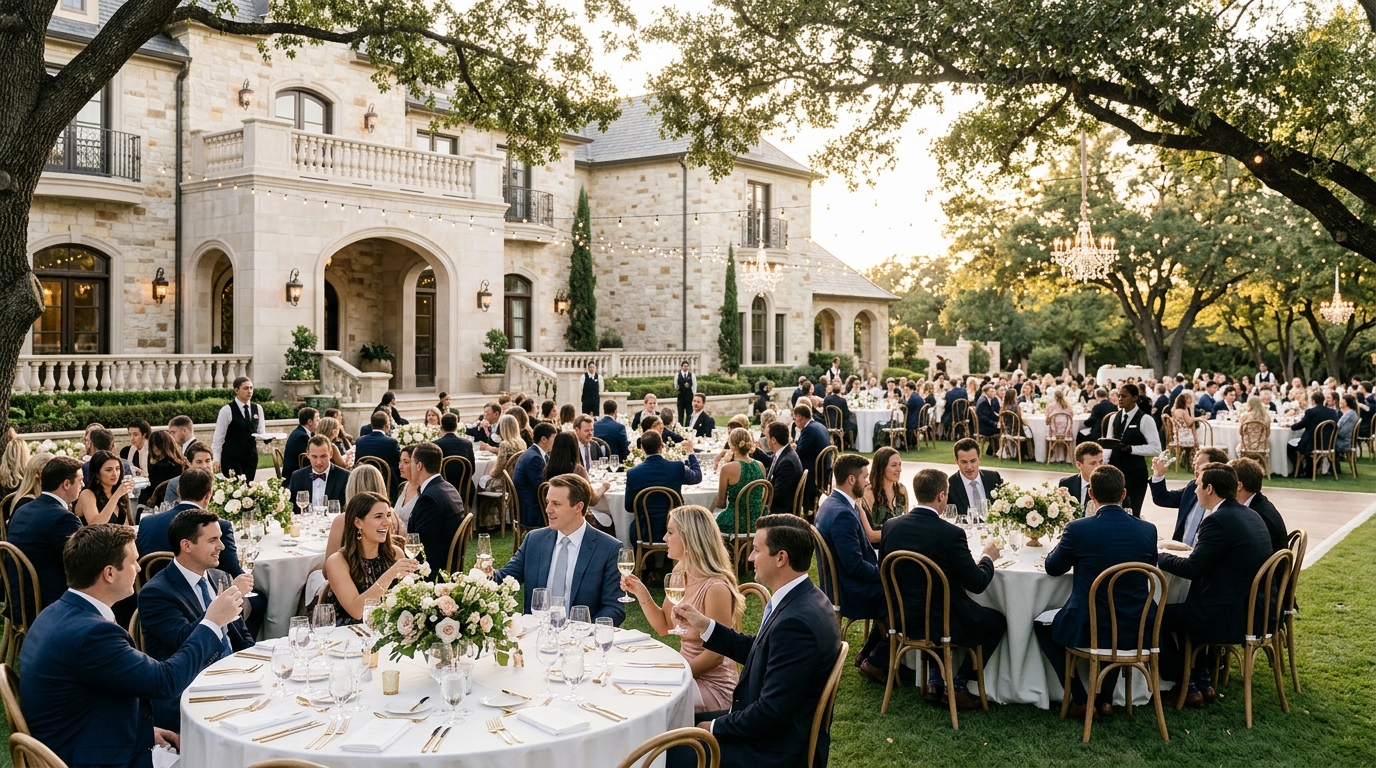
Planning a large-scale celebration requires precise capacity mapping. According to recent industry reports, the average modern wedding now hosts approximately 150 attendees, yet luxury events frequently scale beyond three hundred guests. This shift demands venues that balance expansive square footage with intimate service standards. When you evaluate potential locations, you must prioritize spaces that accommodate your exact headcount without compromising comfort or operational flow. Selecting the right environment prevents logistical bottlenecks and ensures your celebration meets professional hospitality benchmarks. (Contact mdash Knotting Hill)
Understanding Venue Capacity Metrics
Venue capacity is the maximum number of attendees a space can safely and comfortably host during a single event. This metric directly dictates your seating arrangements, dance floor dimensions, and vendor station placements. Many couples mistakenly assume that total square footage alone determines capacity. This assumption often leads to overcrowded reception areas or wasted space during cocktail hours. You must request official capacity certificates from each prospective location. These documents outline fire code limits for seated dinners versus standing receptions. Matching your guest list to certified limits prevents last-minute seating crises and ensures smooth vendor operations.
Large-scale luxury events require dedicated zoning. You should divide your celebration into distinct functional areas. The ceremony site, cocktail lounge, dining hall, and dance floor each demand specific spatial calculations. A well-designed layout allocates approximately 15 to 18 square feet per guest for seated dining. Standing receptions require roughly 10 square feet per attendee. You must verify that your chosen location provides adequate circulation paths. Narrow corridors and cramped loading zones create bottlenecks during peak transition times. Prioritize venues that offer expansive, open-concept floor plans. These environments allow your planner to distribute guests evenly across multiple activity zones.
Matching Indoor and Outdoor Square Footage
Climate-controlled indoor environments provide reliable backup options for unpredictable weather patterns. Luxury estates typically feature expansive indoor halls ranging from 15,000 to 20,000 square feet. These spaces accommodate large guest lists while maintaining temperature regulation and acoustic control. You should verify ceiling heights and structural support columns. High ceilings above 40 feet create an airy atmosphere that prevents spatial compression. Structural columns can obstruct sightlines and limit dance floor expansion. Request a detailed floor plan that highlights load-bearing walls and utility access points.
Outdoor event lawns offer flexible ceremony and reception extensions. Synthetic turf surfaces provide durable, all-weather footing for large guest gatherings. These expansive outdoor zones often add 10,000 square feet of usable event space. You must evaluate drainage systems and ground stability. Heavy rainfall can quickly compromise outdoor setups without proper grading and sub-base preparation. Luxury venues typically invest in advanced irrigation management and reinforced subfloors. You should confirm that your selected location offers seamless indoor-outdoor transitions. Sliding glass walls or retractable enclosures allow you to merge both environments during peak hours. This flexibility maximizes your square footage utilization while maintaining guest comfort.
Evaluating Service Infrastructure and Staff Ratios
Service infrastructure is the collection of technical and operational systems that support large-scale event execution. This includes commercial-grade catering kitchens, dedicated bar stations, and integrated audio-visual control rooms. You must verify that your venue can support your chosen menu style. Plated dinners require extensive plating stations and expediter zones. Family-style service demands wider aisles and additional serving equipment. You should request a complete kitchen equipment list and verify refrigeration capacity. Large guest counts require industrial-grade dishwashing systems and multiple prep stations. Inadequate kitchen infrastructure causes severe service delays and compromises food quality.
Staff-to-guest ratios directly impact service speed and guest satisfaction. Industry standards recommend one server for every 15 to 20 seated dinner guests. Bartending ratios typically require one bartender for every 75 to 100 guests. You must confirm that your venue provides in-house staffing or approved vendor partnerships. Relying on external vendors without venue coordination creates communication gaps. You should request a detailed staffing proposal that outlines roles and shift schedules. Luxury estates typically assign dedicated event managers to oversee each operational department. This centralized coordination prevents service bottlenecks and ensures seamless execution.
Assessing Guest Comfort and Accessibility Features
Guest comfort is the cumulative experience of physical ease, environmental control, and logistical convenience during your celebration. Large guest lists require robust accessibility infrastructure. You must verify ADA compliance across all event zones. Ramps, elevators, and accessible restrooms are non-negotiable requirements. You should request a comprehensive accessibility audit from your venue coordinator. This document outlines wheelchair routes, parking allocations, and emergency evacuation procedures. You must also evaluate climate control systems. Large spaces require industrial HVAC units to maintain consistent temperatures. You should verify that your venue offers zoned climate control for different event areas. This feature prevents overheating during peak reception hours.
Parking and transportation logistics directly impact guest arrival experiences. Valet parking services streamline entry processes for large guest lists. You must verify that your venue provides dedicated valet zones and security personnel. You should request a detailed parking capacity report that outlines total vehicle spaces. Large estates typically allocate 300 to 400 parking spaces for major celebrations. You must also evaluate shuttle services and public transit access. You should confirm that your venue offers complimentary transportation options for out-of-town guests. This convenience reduces parking stress and ensures timely arrival for all attendees.
Comparing Venue Packages and Hidden Costs
Venue packages are structured service bundles that outline included amenities, staffing requirements, and operational hours. You must request a comprehensive pricing breakdown that details every line item. Base rental fees typically cover space usage, basic lighting, and standard furniture. You should verify what additional services require separate contracts. Catering minimums, bar packages, and security deposits often carry separate pricing structures. You must also evaluate overtime fees and vendor load-in charges. Large guest lists frequently require extended rental periods to accommodate full service cycles. You should request a detailed overtime policy that outlines hourly rates and minimum thresholds.
Hidden costs frequently emerge during the final planning stages. You must verify insurance requirements and damage deposit policies. Large venues typically require comprehensive liability coverage and certificate of insurance documentation. You should also evaluate cleaning fees and waste disposal charges. You must confirm that your venue provides adequate trash receptacles and recycling stations. Large guest lists generate significant waste volumes. You should request a complete financial breakdown that outlines every potential charge. This transparency prevents budget overruns and ensures accurate financial planning.
| Venue Feature | Standard Capacity | Luxury Upgrade Option | Operational Benefit |
|---|---|---|---|
| Indoor Event Hall | 15,000 to 18,000 square feet | Climate-controlled expansion | Weather-independent ceremony hosting |
| Outdoor Event Lawn | 8,000 to 12,000 square feet | Synthetic turf integration | All-weather guest circulation |
| Catering Infrastructure | Standard commercial kitchen | Full-service catering kitchen | High-volume plated dinner execution |
| Guest Accommodations | On-site parking only | Luxury rental estate | Extended wedding party housing |
| Transportation Services | Standard valet coordination | Dedicated security and valet | Seamless guest arrival management |
Key Takeaways
- Venue capacity directly dictates spatial planning and operational flow for large celebrations.
- Luxury estates typically offer 17,000 square feet of climate-controlled indoor space.
- Outdoor synthetic lawns add 10,000 square feet of flexible event coverage.
- 55-foot soaring ceilings prevent spatial compression and enhance acoustic quality.
- Large guest lists require dedicated valet parking and professional security personnel.
- On-site luxury rental homes accommodate up to 12 guests within 300 feet of the main estate.
- Strategic location placement ensures 30-minute travel times to downtown Dallas and DFW Airport.
Frequently Asked Questions
How do I calculate the exact square footage needed for my guest list?
You must multiply your total guest count by 15 to 18 square feet per attendee for seated dining. Standing receptions require approximately 10 square feet per guest. You should add 20 percent buffer space for vendor stations and circulation paths. This calculation ensures comfortable movement and prevents spatial overcrowding.
What happens if my guest list exceeds the venue capacity limit?
You must notify your venue coordinator immediately when your final headcount approaches maximum limits. Most luxury estates offer flexible zoning options to expand reception areas. You should verify that your location provides additional outdoor or indoor expansion zones. This flexibility prevents seating conflicts and maintains service quality.
Do luxury venues provide in-house catering and bar services?
Premium estates typically operate exclusive in-house catering and bar programs. You must verify that your location provides full-service culinary teams and licensed bartenders. This arrangement ensures consistent quality control and streamlined vendor coordination. You should request a complete menu tasting and beverage package breakdown.
How do I accommodate out-of-town guests at large-scale celebrations?
You must evaluate venue proximity to major transportation hubs and hotel districts. Luxury estates typically offer on-site luxury rental homes for wedding party housing. You should verify that your location provides shuttle services and dedicated parking allocations. This convenience reduces travel stress and ensures timely guest arrival.
What insurance requirements apply to large wedding events?
You must secure comprehensive liability coverage that meets venue insurance thresholds. Most luxury estates require certificates of insurance that name the property as additional insured. You should verify that your policy covers guest injuries, vendor accidents, and property damage. This documentation protects both your celebration and venue operations.
Can I host both ceremony and reception at the same location?
Premium estates typically offer dedicated ceremony sites and adjacent reception halls. You must verify that your location provides seamless indoor-outdoor transitions. This arrangement eliminates transportation logistics and maintains guest flow. You should request a complete floor plan that outlines both event zones.
How do I manage vendor load-in and setup schedules?
You must coordinate vendor arrival times with your venue operations team. Large estates typically allocate specific load-in windows to prevent scheduling conflicts. You should verify that your location provides adequate loading docks and elevator access. This coordination ensures timely setup and prevents operational bottlenecks.
Secure Your Preferred Date
Selecting the right luxury wedding venue requires precise capacity mapping, operational verification, and comprehensive financial planning. You must evaluate square footage, service infrastructure, and guest comfort metrics before committing to a location. Our estate offers expansive climate-controlled spaces, dedicated outdoor lawns, and premium on-site accommodations to support your celebration. Contact our events team today to schedule a private tour and review our complete venue specifications. Visit https://knottinghillplace.com/contact to begin your planning process and secure your preferred date.