

Modern couples increasingly prioritize personalized experiences over traditional templates. According to recent industry reports, nearly eighty percent of luxury wedding planners now recommend bespoke venue layouts to maximize guest engagement. This shift toward customized celebrations demands careful coordination between space utilization and aesthetic vision. High-end venues provide the foundational infrastructure required to execute complex design concepts without compromising operational efficiency. Understanding how to leverage existing amenities while introducing unique elements remains the cornerstone of successful event planning.
Spatial Configuration and Layout Design
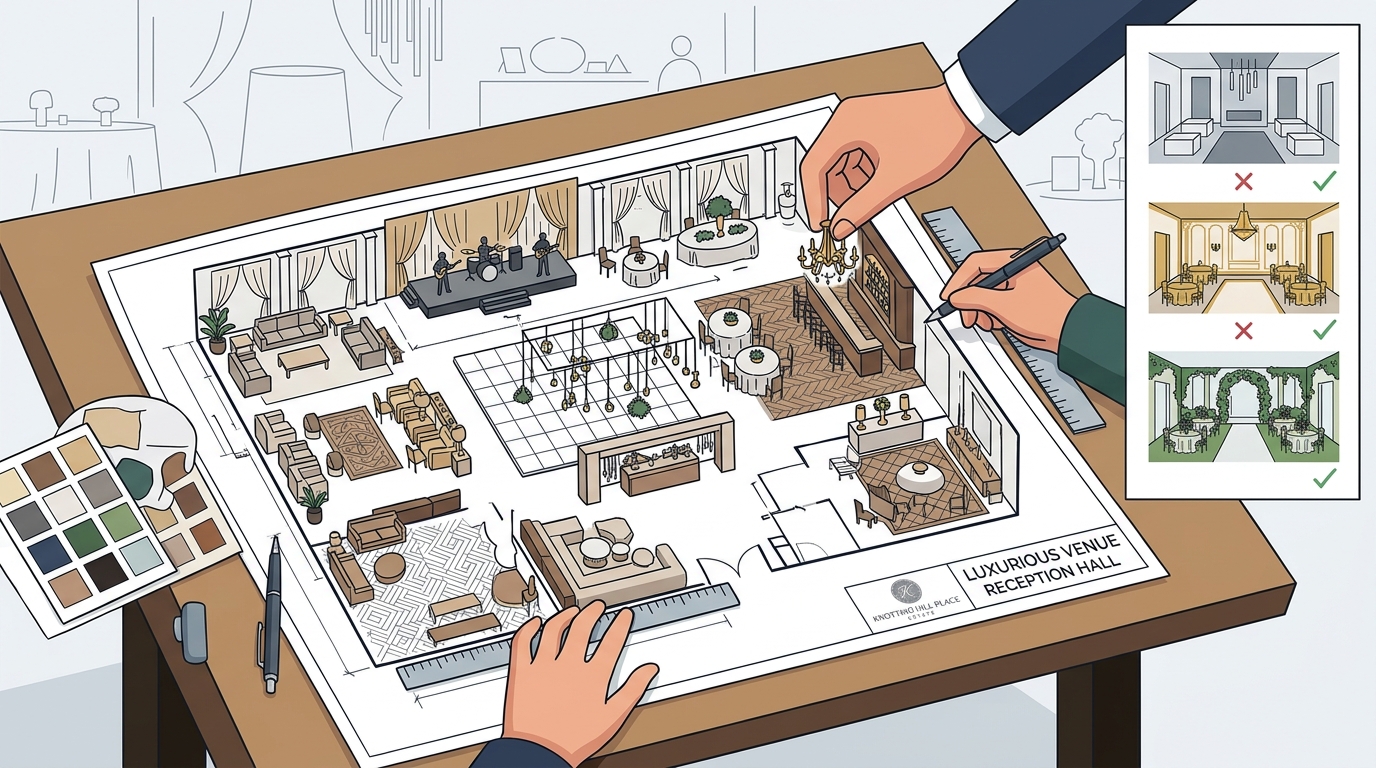
Customizing a wedding begins with understanding how to manipulate physical space. Spatial configuration is the strategic arrangement of architectural elements to support specific ceremonial functions. Large-capacity venues offer distinct advantages for couples seeking expansive layouts. A climate-controlled indoor environment spanning seventeen thousand square feet allows for seamless transitions between ceremony and reception zones. Synthetic grass event lawns provide additional outdoor capacity without sacrificing comfort. Couples should evaluate ceiling heights and sightlines to ensure optimal visibility for all attendees. High-end venues typically include valet parking and dedicated security personnel to streamline guest arrival. This operational foundation eliminates logistical friction during peak hours.
Indoor Climate Control Benefits
Weather independence remains a critical factor for luxury celebrations. Climate-controlled spaces guarantee consistent temperature regulation regardless of seasonal fluctuations. This feature protects delicate floral installations and preserves guest comfort during extended receptions. Venues offering fifty-five-foot ceilings create an airy atmosphere that amplifies lighting design. Strategic lighting placement transforms standard architectural features into immersive environments. Couples can request custom rigging for chandeliers or projection mapping to enhance spatial depth.
Outdoor Lawn Utilization
Synthetic turf surfaces eliminate maintenance concerns while providing a stable foundation for outdoor ceremonies. These surfaces accommodate heavy equipment and large guest counts without damaging underlying soil. Event lawns spanning ten thousand square feet enable flexible seating arrangements and dance floor expansion. Couples often position ceremony arches near natural landscape features to create photographic backdrops. The combination of indoor and outdoor zones allows hosts to pivot activities based on real-time weather conditions.
Strategic Vendor Integration
Successful customization requires careful vendor selection and coordination. Vendor integration is the systematic onboarding of specialized service providers to execute specific event components. High-end venues typically maintain curated partner networks to ensure quality control. Couples should review preferred partner directories to identify vendors familiar with venue-specific load-in procedures. These partnerships reduce setup time and minimize venue damage risks. Professional coordinators often facilitate vendor meetings to align technical requirements with architectural constraints. This collaborative approach prevents scheduling conflicts during peak event hours.
Floral and Decor Coordination
Floral design directly impacts spatial perception and guest experience. Custom installations require precise measurement of load-bearing structures and ceiling clearance. Venues with dedicated floral support teams streamline delivery scheduling and installation protocols. Couples can request bespoke centerpieces that complement existing architectural details. Professional decorators often utilize modular staging to create tiered visual interest. This approach maximizes vertical space while maintaining clear sightlines for photography.
Bar and Beverage Services
Onsite bar operations significantly influence reception pacing and guest satisfaction. Full-service catering kitchens enable customized menu execution without external equipment restrictions. Couples can design signature cocktail programs that align with seasonal ingredients and thematic elements. Beverage stations positioned near entry points reduce congestion during peak service windows. Professional bartenders coordinate with venue staff to maintain inventory levels throughout extended celebrations.
Catering Flexibility and Menu Engineering
Custom menus require careful alignment with venue infrastructure. Catering flexibility is the ability to adapt food service formats to specific guest counts and dietary requirements. High-end venues typically provide in-house culinary teams capable of executing multi-course plated dinners or interactive food stations. Couples should request detailed tasting sessions to evaluate flavor profiles and presentation standards. These sessions allow hosts to adjust portion sizes and plating aesthetics before finalizing contracts. Professional chefs often incorporate local sourcing to enhance menu authenticity and reduce transportation costs.
Service Format Selection
Service formats directly impact guest interaction and venue flow. Plated dinners offer structured pacing and elegant presentation for formal celebrations. Family-style service encourages communal dining and facilitates conversation across larger tables. Food station concepts provide interactive experiences that keep guests engaged during extended cocktail hours. Couples should evaluate their guest list demographics to select the most appropriate service model. Venue coordinators assist with equipment rental to support chosen service formats.
Dietary Accommodation Protocols
Modern celebrations require comprehensive dietary accommodation strategies. Professional catering teams maintain detailed allergen tracking systems to prevent cross-contamination. Couples should provide advance guest lists to enable precise menu customization. These protocols ensure inclusive dining experiences for guests with specific health requirements. Venue managers often coordinate with external caterers to verify compliance with local health regulations.
Accommodation Logistics and Guest Flow
Extended celebrations benefit from integrated lodging solutions. Accommodation logistics is the strategic planning of guest housing to minimize transportation friction and maximize event continuity. High-end venues increasingly offer on-site residential properties to host wedding parties and immediate family. These properties typically feature multiple bedrooms, full kitchens, and recreational amenities. Couples can reserve these spaces to centralize guest activities and reduce shuttle scheduling complexities. Proximity to the main event space enables seamless transitions between rehearsal dinners and morning-after brunches.
On-Site Residential Options
Dedicated wedding party homes provide exclusive privacy and convenience. These properties often include swimming pools, hot tubs, and private theaters to enhance guest relaxation. Couples can configure these spaces to serve as preparation areas for bridal parties or post-ceremony lounges. The proximity to main event zones reduces transportation costs and environmental impact. Venue managers coordinate key distribution and security protocols to protect residential assets.
Transportation Coordination
Guest transportation requires careful scheduling to maintain event momentum. Professional coordinators arrange shuttle services between nearby hotels and venue entrances. These services operate on fixed routes to prevent scheduling bottlenecks. Couples should provide advance guest addresses to optimize routing efficiency. Venue staff often monitor traffic patterns to adjust pickup times dynamically.
Technology and Audiovisual Integration
Modern weddings demand sophisticated technical execution. Audiovisual integration is the systematic implementation of sound, lighting, and projection systems to enhance guest experience. High-end venues typically provide built-in infrastructure to support complex technical requirements. Couples should request technical riders to outline specific equipment needs before event day. Professional technicians conduct sound checks to eliminate feedback and ensure clear audio distribution. These preparations prevent technical disruptions during critical ceremony moments.
Lighting Design Strategies
Strategic lighting transforms standard architectural spaces into immersive environments. Custom rigging allows hosts to position moving heads, uplights, and pin spots to highlight specific zones. Couples can request color-changing gels to align lighting schemes with seasonal themes. Professional designers coordinate with venue electricians to ensure safe power distribution. These technical preparations create dramatic visual impact during reception hours.
Projection and Display Systems
Projection mapping enhances spatial depth and guest engagement. High-resolution projectors enable hosts to display custom graphics, live feeds, or animated backgrounds. Couples can synchronize projection content with musical performances to create synchronized experiences. Professional technicians calibrate focus and brightness to ensure optimal visibility across large audiences. These systems require careful cable management to maintain venue safety standards.
Timeline Management and Execution
Successful customization relies on precise scheduling. Timeline management is the systematic coordination of vendor arrivals, guest movements, and ceremonial milestones to ensure seamless execution. Professional event coordinators develop detailed run sheets to track every operational component. Couples should allocate buffer periods between major transitions to accommodate unexpected delays. These buffers prevent cascading schedule disruptions that impact guest satisfaction. Venue managers often assign dedicated floor managers to monitor real-time progress.
Vendor Load-In Protocols
Vendor arrival schedules require precise coordination to prevent loading dock conflicts. Professional coordinators assign specific time slots to each service provider. These protocols ensure equipment delivery aligns with venue accessibility windows. Couples should verify loading zone dimensions to accommodate large transportation vehicles. Venue staff often supervise unloading procedures to protect flooring and architectural features.
Guest Arrival Sequencing
Guest arrival patterns directly impact venue capacity utilization. Professional coordinators stagger arrival times to prevent entrance congestion. These strategies allow hosts to manage parking logistics and security checkpoints efficiently. Couples should provide advance guest counts to optimize staffing levels. Venue managers often deploy additional personnel during peak arrival windows to maintain smooth operations.
| Customization Category | Venue Capability | Implementation Strategy | Recommended Action |
|---|---|---|---|
| Spatial Layout | Seventeen thousand square feet indoor space | Flexible partitioning and ceiling rigging | Review venue specifications |
| Outdoor Capacity | Ten thousand square feet synthetic lawn | Weather-independent flooring and staging | View outdoor gallery |
| Lodging Solutions | Six bedroom residential property | On-site family housing and amenities | Explore lodging options |
| Vendor Coordination | Curated partner network | Preferred vendor directory and load-in support | Browse vendor directory |
| Technical Infrastructure | Built-in audio and lighting systems | Professional rigging and equipment rental | Learn about experience |
Key Takeaways
- High-end venues typically accommodate three hundred to four hundred guests across combined indoor and outdoor zones.
- Climate-controlled environments spanning seventeen thousand square feet eliminate weather-related scheduling risks.
- Synthetic event lawns provide ten thousand square feet of weather-independent ceremony space.
- On-site residential properties offer six bedrooms and five and a half bathrooms for wedding party housing.
- Professional venues include included valet parking and dedicated security personnel to streamline guest arrival.
- Curated vendor directories reduce technical coordination friction and ensure venue-specific compliance.
- Full-service catering kitchens enable customized menu execution without external equipment restrictions.
Frequently Asked Questions
How do I customize the layout of a large-capacity wedding venue?
You can customize the layout by utilizing flexible partitioning systems and requesting professional rigging for ceiling-mounted installations. Venue coordinators assist with spatial mapping to ensure optimal sightlines and guest flow. You should request detailed floor plans to visualize different configuration options before finalizing your contract.
What amenities are included when booking a high-end wedding venue?
Most premium venues provide climate-controlled indoor spaces, full-service catering kitchens, and dedicated bar operations. You will typically receive included valet parking and professional security personnel to manage guest arrival. These foundational amenities reduce external rental costs and streamline event execution.
Can I host my wedding party in an on-site residential property?
Yes, many luxury venues offer dedicated residential properties specifically designed for wedding party housing. These properties typically feature multiple bedrooms, full kitchens, and recreational amenities like swimming pools. You can reserve these spaces to centralize guest activities and reduce transportation logistics.
How do I coordinate vendors for a customized high-end celebration?
You should utilize the venue preferred partner directory to identify providers familiar with specific load-in procedures. Professional coordinators facilitate vendor meetings to align technical requirements with architectural constraints. This collaborative approach prevents scheduling conflicts and ensures seamless execution.
What timeline management strategies work best for large weddings?
Professional event coordinators develop detailed run sheets to track every operational component and guest movement. You should allocate buffer periods between major transitions to accommodate unexpected delays. These strategies prevent cascading schedule disruptions and maintain guest satisfaction throughout extended celebrations.
How does venue capacity impact customization options?
Larger capacities enable more complex spatial configurations and diverse service formats. Venues accommodating three hundred to four hundred guests typically offer separate ceremony and reception zones. You can leverage these distinct areas to create unique guest experiences without compromising overall event flow.
Begin Your Customization Journey
Customizing a high-end wedding requires strategic planning, precise vendor coordination, and comprehensive venue utilization. You can transform standard architectural spaces into personalized celebrations by leveraging existing amenities and introducing bespoke design elements. Professional coordinators guide you through every operational phase to ensure seamless execution. Schedule a private tour to evaluate spatial configurations and discuss your specific vision. Contact our team today to reserve your preferred date and begin planning your customized celebration.