
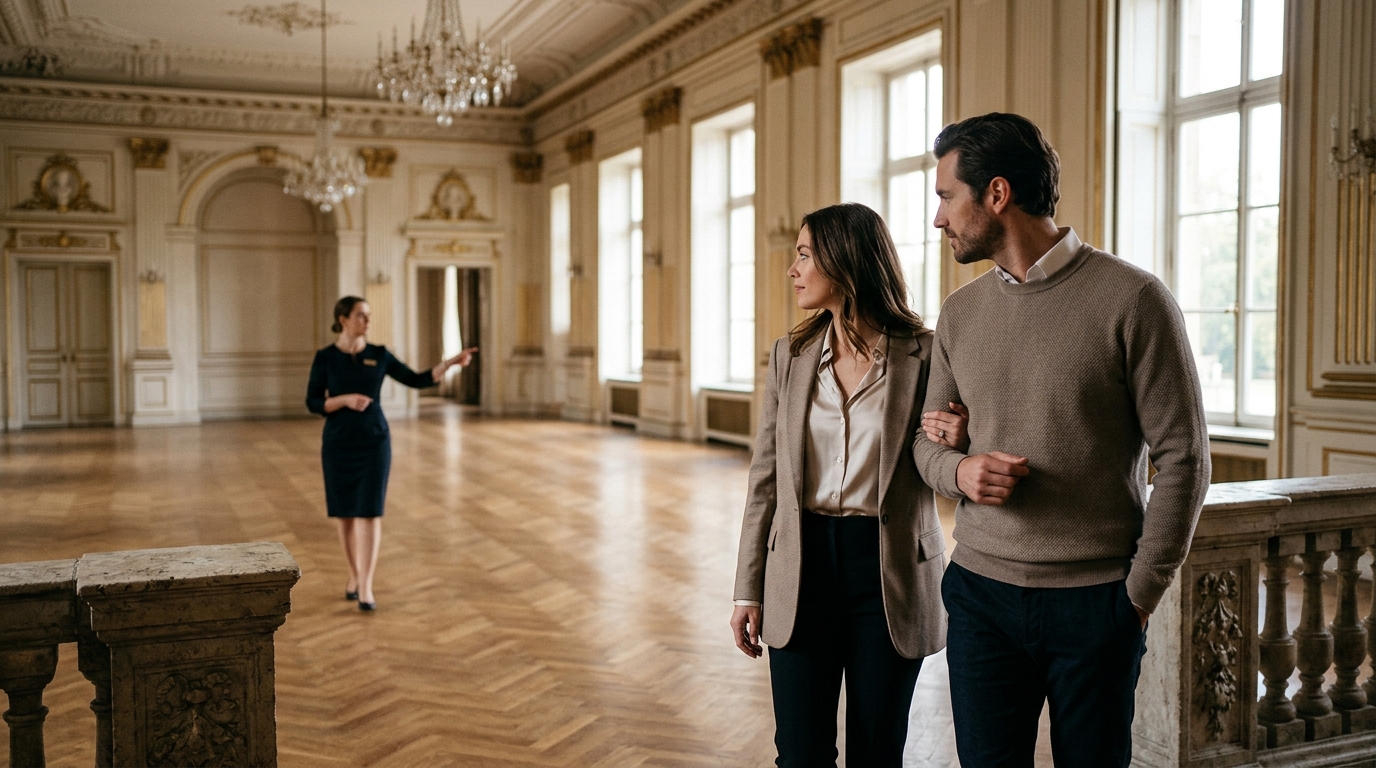
Your guest list is arguably the single most consequential decision you will make early in the planning process — it dictates your budget, your catering scope, your timeline, and above all, the venue you book. Getting the venue-to-guest-count ratio wrong means either a room that feels uncomfortably packed or a grand space that swallows your celebration whole. This guide walks you through every step, from realistic headcount forecasting to square-footage math, so you can lock in a luxury venue that fits your crowd perfectly.
Step 1: Finalize a Realistic Guest Count Before You Tour
One of the most common missteps couples make is beginning the venue search before nailing down their headcount. As wedding planners frequently note, most couples begin venue shopping before finalizing their guest list, and this often leads to problems down the road. Start with a tiered invitation list: non-negotiable guests first (immediate family and closest friends), then secondary circles organized into A and B waves so you can control your final number.
Estimate Attendance, Not Just Invitations
The number you put on an invitation is never the number that walks through the door. A widely used planning benchmark suggests that roughly 90 percent of your guest list will attend your wedding, and planners recommend using that figure for budgeting. For local celebrations, expect an additional 3–8 percent of last-minute declines. If only 80 percent end up attending, you gain budget flexibility rather than face a shortfall.
This attendance estimate becomes your working headcount — the number you share with every venue coordinator during tours.
Step 2: Understand Maximum Capacity vs. Comfortable Capacity
Every venue proudly advertises a maximum capacity figure, but that number is almost always based on fire-code math, not real-world wedding logistics. A venue's posted maximum capacity is the largest number it can legally hold, not necessarily the number at which guests will be comfortable. Once you add seated dinner rounds, a dance floor, catering stations, bars, DJ or band staging, photo areas, and vendor workspace, that headline figure shrinks considerably.
The practical rule: maintain a 10- to 15-percent buffer below the stated maximum. This comfort margin creates a noticeably more relaxed atmosphere and avoids the cramped, banquet-hall feel that undermines a luxury experience.
Step 3: Calculate Square Footage by Reception Style
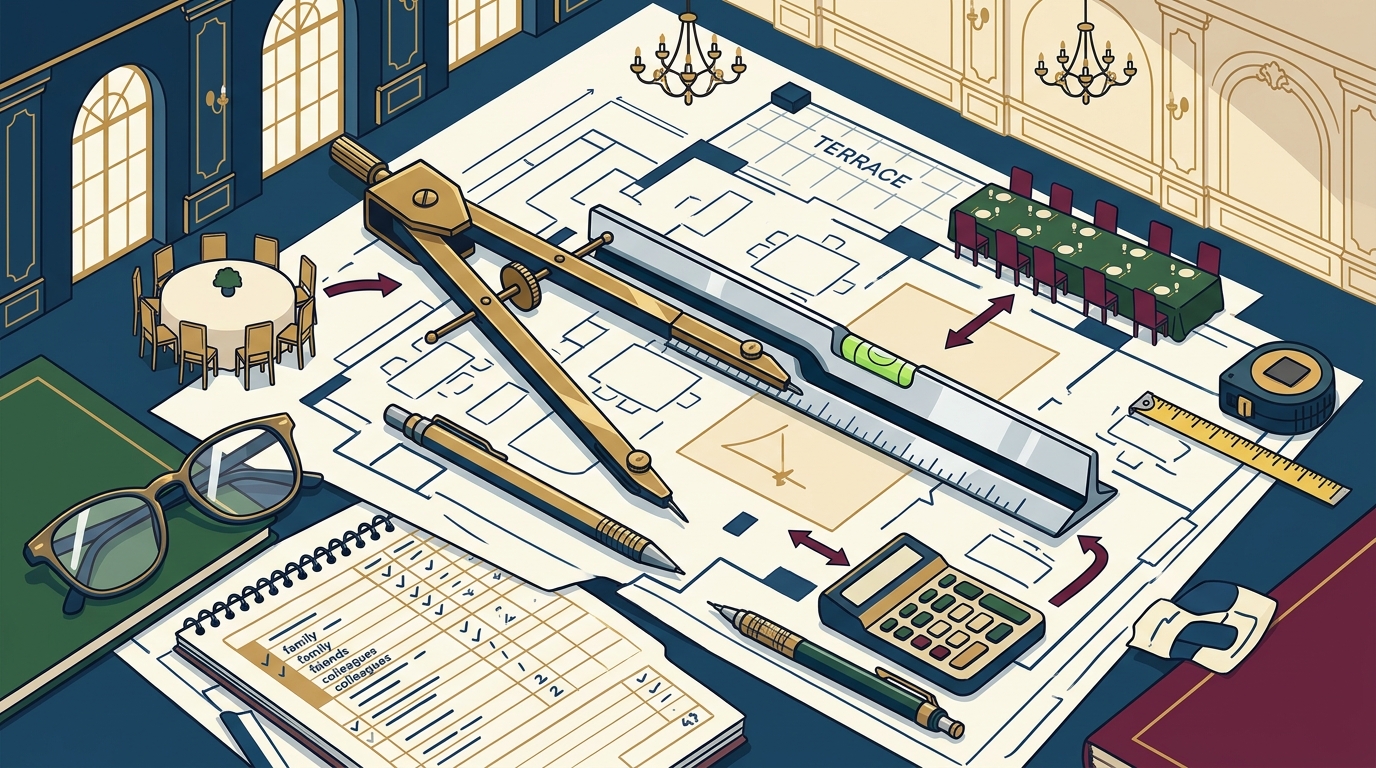
The style of reception you envision dramatically changes how many guests a room can hold. Industry standards for wedding venues recommend allocating 10–15 square feet per guest for seated dinners and 8–10 square feet for cocktail receptions. A formal seated dinner with round tables is the most space-intensive arrangement, requiring roughly 11–12 square feet per person when factoring chair pull-out room and server paths.
Quick Reference Table
| Reception Style | Sq Ft per Guest | 100 Guests Need | 200 Guests Need |
|---|---|---|---|
| Cocktail / standing | 6–8 sq ft | 600–800 sq ft | 1,200–1,600 sq ft |
| Cocktail with lounge clusters | 8–10 sq ft | 800–1,000 sq ft | 1,600–2,000 sq ft |
| Seated dinner (rounds) | 11–15 sq ft | 1,100–1,500 sq ft | 2,200–3,000 sq ft |
| Seated dinner (banquet/long tables) | 10–12 sq ft | 1,000–1,200 sq ft | 2,000–2,400 sq ft |
These figures cover dining areas only. Add 15–20 percent of your total floor plan for a dance floor sized for roughly one-third of your guests at any given time.
Step 4: Match Your Guest Tier to the Right Venue Type
Different guest counts call for fundamentally different types of spaces. Couples with an intimate guest list of 50 to 75 people will find a very different set of options than those planning for 200 or more. Here is how the tiers typically break down:
Intimate Weddings (Under 75 Guests)
Private estates, boutique hotels, upscale restaurants, and garden courtyards work beautifully at this scale. Smaller guest counts often enable upgraded menu options, enhanced service presentations, and personalized attention that larger celebrations cannot accommodate. The per-guest budget can be redirected into bespoke touches — think curated tasting menus, letterpress place cards, or live musicians at every course.
Mid-Size Celebrations (75–175 Guests)
Medium-sized weddings often have the most venue options, as this guest count fits comfortably at most locations that specialize in weddings. Ballrooms, converted industrial lofts, and dedicated estate venues all shine in this range. This flexibility enables couples to prioritize other factors such as location, style, and budget.
Grand Celebrations (175+ Guests)
Large weddings require venues with substantial capacity, adequate facilities, and a support team with extensive wedding experience. Look for dedicated ceremony, cocktail, and reception spaces within walking distance of each other so transitions remain smooth for a large group. A venue like Knotting Hill Place, nestled just north of Dallas in Little Elm, Texas, is purpose-built for large guest counts — offering both stunning indoor reception halls and outdoor ceremony spaces set across meticulously landscaped grounds, all supported by a dedicated planning team.
Step 5: Factor in Luxury-Specific Space Requirements
Luxury celebrations layer additional spatial demands that standard capacity calculators miss. Premium venues often mandate specific vendors and service levels, and enhanced service ratios mean more staff per guest — each server, bartender, and coordinator occupies floor space. Factor in:
- Live entertainment staging: A full band or orchestra requires 150–250 sq ft of stage area plus power and sound-check clearance.
- Elevated bar setups: Craft cocktail bars, champagne towers, or whiskey-tasting stations need dedicated counters and queuing space.
- Lounge vignettes: Plush seating clusters with cocktail tables and ambient lighting add atmosphere but consume square footage.
- Photo installations: 360-degree video booths, step-and-repeat walls, or floral arches require 80–120 sq ft each.
- Welcome experiences: Champagne walls, live calligraphers, and escort-card displays all need entry-zone real estate.
At estate venues like Knotting Hill Place, the blend of old-world charm and contemporary design provides dedicated zones for each of these elements without compromising the primary reception layout.
Step 6: Evaluate Flow Zones and Transition Areas
Guest comfort is not just about the reception room — it is about how people move between ceremony, cocktail hour, dinner, and dancing. Designating dedicated zones separates high-energy activities from relaxed seating areas, reducing crowding and giving guests choice. Look for venues that offer:
- Separate ceremony and reception spaces so there is no room-flip delay.
- A distinct cocktail-hour area (patio, courtyard, or secondary lounge) that keeps guests entertained while the reception space is finalized.
- Clear transition paths wide enough for large groups to move without bottlenecks.
- Adequate restroom facilities relative to the guest count.
- Accessible parking or valet staging that prevents arrival congestion.
Knotting Hill Place's estate layout — with its outdoor courtyard, wooded ceremony areas, veranda patio, and grand indoor halls — illustrates how a well-designed luxury property naturally guides guests from one moment to the next.
Step 7: Tour with Purpose — Questions to Ask On-Site
When you visit a prospective venue, move beyond the standard walk-through. Bring your working headcount and ask targeted questions:
- "Can I see a sample floor plan at my guest count?" — Reviewing a layout specific to your numbers reveals whether tables, a dance floor, and vendor stations actually fit without crowding.
- "What is the comfortable capacity versus the posted maximum?" — The gap between these two numbers tells you how much breathing room your guests will have.
- "Where do vendors set up — and is that space counted in the capacity number?" — Catering prep, DJ booths, and photographer gear all occupy floor area.
- "What is the backup plan for outdoor elements?" — If part of your event is outdoors, confirm that a weather contingency does not push everyone into an already-full indoor space.
- "How does the venue handle transitions for large groups?" — Ask about cocktail-to-reception flow, accessible pathways, and timing between event segments.
Key Takeaways
- Finalize your working headcount — roughly 90 percent of invitees — before you start touring venues.
- Never plan to fill a venue to its posted maximum; keep a 10–15 percent comfort buffer.
- Allocate 10–15 square feet per guest for a seated dinner and 8–10 for a cocktail reception.
- Luxury weddings need extra floor space for live entertainment, lounge areas, bar setups, and photo installations.
- Evaluate the full guest journey — arrival, ceremony, cocktails, reception, dancing — not just the main room.
- Venues purpose-built for large celebrations, like Knotting Hill Place in Little Elm, TX, provide the spatial flexibility, dedicated flow zones, and on-site coordination that grand guest lists demand.
Frequently Asked Questions
How far below a venue's maximum capacity should my guest count be?
Most planners recommend keeping your guest count 10–15 percent below the venue's stated maximum. This comfort margin ensures space for dance floors, catering stations, entertainment staging, and comfortable movement between tables.
How many square feet per guest do I need for a seated dinner?
Industry guidelines suggest 10–15 square feet per guest for a seated dinner, with round-table layouts at the higher end (11–15 sq ft) and banquet-style long tables at the lower end (10–12 sq ft). These figures cover tables, chairs, aisles, and server circulation.
What percentage of my guest list should I expect to attend?
A common planning benchmark is approximately 90 percent attendance for local weddings. For destination events, attendance rates may be slightly lower, while very close-knit guest lists can see rates above 90 percent.
Does Knotting Hill Place accommodate large guest counts?
Yes. Knotting Hill Place is North Texas' premier luxury estate wedding venue, specifically designed for large guest count events. The property features expansive indoor reception halls, an outdoor courtyard, wooded ceremony settings, and a veranda patio — all situated on a landscaped estate just north of Dallas in Little Elm, Texas.
What hidden space needs should I plan for at a luxury wedding?
Beyond guest seating, luxury celebrations require dedicated space for live band or orchestra staging, craft cocktail bars, lounge vignettes, photo installations, welcome-experience stations, and additional vendor staff. These elements can consume 20–30 percent more floor area than a standard reception layout.
Should I finalize my guest list before choosing a venue?
Absolutely. Starting the venue search without a working headcount is one of the most common planning mistakes. Booking a venue without considering your guest list can lead to overcrowding, limited seating, or even having to change venues altogether. Begin with your non-negotiable guest tier and build outward.